
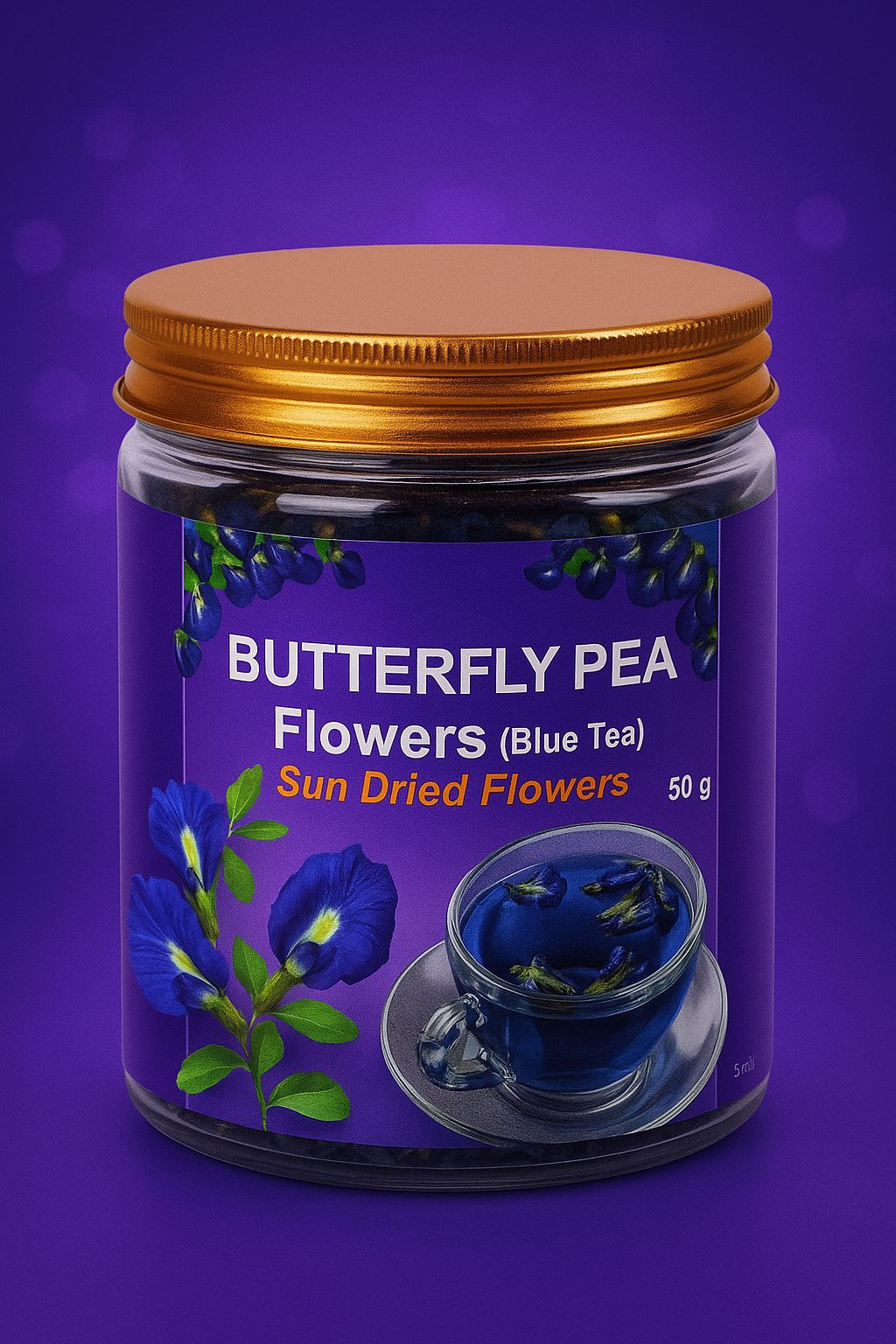
Blue Tea (Butterfly Pea Flower)
Blue Tea (also called Butterfly Pea Flower Tea) is a caffeine-free herbal tea or tisane infusion made from the dried petals or whole flowers of the Clitoria ternatea plant, commonly known as Butterfly Pea Flower (Shankhpushpi in Ayurveda).
Consumed hot or iced as herbal tea. Used in mocktails, cocktails, lattes, smoothies (because of its magical color-changing property). Increasingly popular in cafés and wellness brands in the USA, Europe, and Middle East. In Thailand and Vietnam, Blue Tea mixed with honey and lemon is usually served after dinner or as refreshment at hotels and spas.
Why Import Blue Tea?
Business opportunities that drive growth
Unique color-changing properties attract consumers
Growing café and beverage market adoption
Instagram-worthy product for social media marketing
Caffeine-free alternative to traditional teas
Multiple applications in food and beverages
Available Product Forms
Hover over each product to see detailed specifications
Dried Butterfly Pea Flowers
Premium quality whole dried flowers with natural blue color
Dried Butterfly Pea Flowers
Premium quality whole dried flowers with natural blue color
Specifications:
Packaging Options:
Applications:
Key Benefits:
Consumed hot or iced as herbal tea. Used in mocktails, cocktails, lattes, smoothies (because of its magical color-changing property). Increasingly popular in cafés and wellness brands in the USA, Europe, and Middle East. In Thailand and Vietnam, Blue Tea mixed with honey and lemon is usually served after dinner or as refreshment at hotels and spas.
Blue Tea is known as Shankhpushpi in Ayurveda. Unlike green tea which contains caffeine and can have side effects, Blue Tea is completely caffeine-free with more health benefits. In Thailand and Vietnam, Blue Tea mixed with honey and lemon is usually served after dinner or as refreshment at hotels and spas. Consumed hot or iced, it's increasingly popular in mocktails, cocktails, lattes, and smoothies in cafés and wellness brands across USA, Europe, and Middle East. Magic in a cup: One of the distinctive aspects of Blue Tea is that the liquid changes colour based on the ph level of the substance added to it. For instance, adding a few drops of lemon juice will turn it purple. Hence, used to add exotic colour in food, beverages and pastries.